Introduction
In today’s highly competitive paper industry, visual quality is just as important as mechanical performance. Whether for printing paper, packaging board, tissue, or specialty papers, brightness and whiteness strongly influence customer perception and product value. This is where optical brighteners—also known as optical brightening agents (OBAs) or fluorescent whitening agents (FWAs)—play a critical role.
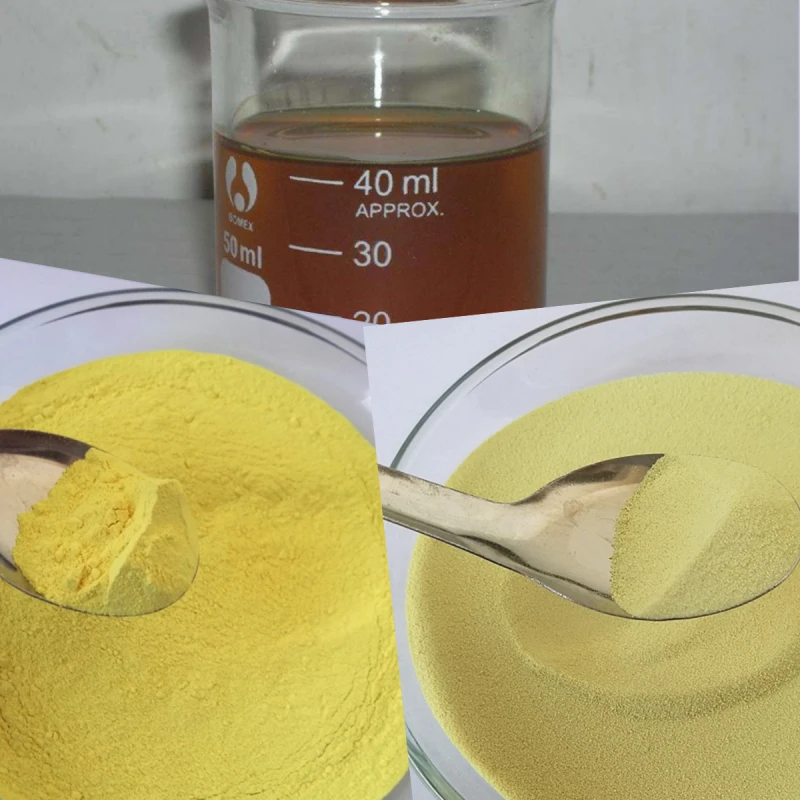
Optical brighteners used in paper are specialty chemicals that absorb ultraviolet (UV) light and re-emit it as visible blue light. This optical effect compensates for the natural yellowish tone of cellulose fibers, making paper appear brighter, whiter, and cleaner without increasing pigment loading.
This article provides an in-depth, data-supported analysis of:
What optical brighteners are
Which optical brighteners can be used in paper
Performance differences between major OBA types
Application methods in papermaking
Practical selection guidelines
Why choosing a reliable manufacturer matters
The goal is to offer both technical clarity and real-world usability for paper manufacturers, buyers, and R&D professionals.
What Are Optical Brighteners and How Do They Work?
Optical brighteners are organic compounds with conjugated aromatic structures capable of fluorescence. Their mechanism is purely optical, not chemical bleaching.
Working Principle
Absorb UV light (typically 300–380 nm)
Emit blue-violet visible light (420–470 nm)
Offset yellow tones in paper fibers
Increase perceived whiteness and brightness
Unlike bleaching agents, optical brighteners do not damage fiber strength and are effective at very low dosages, making them cost-efficient and environmentally preferable.
Learn about related products:
Optical brightening agents (OBA) in paper effect
Paper Industry use Optical Brightener APC
Optical Brighteners BBU in Paper
Why Optical Brighteners Are Essential in Papermaking
The use of optical brighteners in paper manufacturing offers multiple advantages:
Enhanced paper whiteness and brightness
Improved print contrast and color reproduction
Reduced need for titanium dioxide or fillers
Lower overall production cost
Consistent appearance across batches
They are widely used in:
Printing and writing paper
Copy paper
Coated paper
Tissue and hygiene paper
Packaging and paperboard
Main Types of Optical Brighteners Used in Paper
Different paper grades and production processes require different optical brighteners. Below are the most commonly used categories.
1. Stilbene-Based Optical Brighteners (Most Widely Used)
Stilbene derivatives are the dominant optical brighteners used in paper due to their excellent fluorescence efficiency and chemical stability.
Common Examples
OB-1
OB-3
OB-C
OB-F
Key Advantages
High whitening efficiency
Good compatibility with cellulose fibers
Stable under neutral and alkaline conditions
Cost-effective for large-scale use
Typical Applications
Internal addition
Surface sizing
Coated paper
2. Coumarin-Based Optical Brighteners
Coumarin OBAs are less commonly used in papermaking due to limited water solubility but are still suitable for certain specialty papers.
Characteristics
High fluorescence intensity
Lower thermal stability
Limited alkali resistance
Typical Applications
Specialty papers
Low-temperature processes
3. Benzoxazole-Based Optical Brighteners
Benzoxazole OBAs are known for their excellent thermal and chemical stability.
Key Features
Strong resistance to heat and light
Stable under harsh processing conditions
Higher cost compared to stilbene types
Typical Applications
High-grade coated paper
Specialty industrial papers
Comparative Data Table: Common Optical Brighteners Used in Paper
Performance Comparison of Optical Brighteners for Papermaking
| Type | Chemical Structure | Water Solubility | Whiteness Increase (%) | Heat Resistance | Cost Level |
|---|---|---|---|---|---|
| Stilbene-based | Disulfonated stilbene | Excellent | 18–30% | High | Low |
| Coumarin-based | Lactone structure | Moderate | 10–18% | Medium | Medium |
| Benzoxazole-based | Heterocyclic aromatic | Low | 15–25% | Very High | High |
Application Methods of Optical Brighteners in Paper
Choosing the right application method is just as important as selecting the correct product.
1. Internal Addition (Wet-End Application)
Added directly to pulp slurry
Suitable for uncoated and printing papers
Requires good retention control
Advantages
Uniform distribution
Cost-efficient
Limitations
Reduced effectiveness due to fiber adsorption loss
2. Surface Sizing Application
Added to starch or PVA sizing solutions
Applied at the size press
Advantages
Higher surface whiteness
Improved printability
Limitations
Additional process step
3. Coating Application
Used in coating formulations
Common for high-end coated papers
Advantages
Maximum brightness and gloss
Excellent visual performance
Limitations
Higher material cost
Recommended Optical Brighteners by Paper Type
Optical Brightener Selection Guide for Paper Grades
| Paper Type | Recommended OBA Type | Dosage (kg/ton) | Application Method |
|---|---|---|---|
| Copy Paper | Stilbene-based OB | 0.2–0.5 | Internal + Sizing |
| Coated Paper | Benzoxazole-based | 0.3–0.6 | Coating |
| Tissue Paper | Stilbene-based OB | 0.1–0.3 | Internal |
| Packaging Board | Stilbene-based OB | 0.15–0.4 | Internal |
| Specialty Paper | Coumarin-based | 0.2–0.4 | Surface |
Key Factors When Choosing Optical Brighteners for Paper
To achieve optimal results, paper manufacturers should evaluate the following:
1. Compatibility with Papermaking Chemicals
Optical brighteners must work well with:
Retention aids
Fillers
Starch
Sizing agents
2. pH Stability
Most modern paper machines operate under neutral to alkaline conditions. Stilbene-based OBAs perform best in this range.
3. Dosage Efficiency
High-quality OBAs achieve the same whiteness with lower dosage, reducing cost and risk of fluorescence quenching.
4. Regulatory and Environmental Compliance
Products should meet:
REACH
FDA (where applicable)
Low heavy metal content
Future Trends in Optical Brighteners for Paper
The papermaking industry is evolving toward:
Sustainable raw materials
Lower energy consumption
Reduced chemical load
Modern optical brighteners are being optimized for:
Higher fluorescence efficiency
Better biodegradability
Improved compatibility with recycled fibers
This makes supplier innovation and technical support increasingly important.
Why Choose Shandong Raytop Chemical Co., Ltd. as Your Optical Brightener Supplier?
When selecting optical brighteners used in paper, the manufacturer’s technical capability, quality stability, and service reliability are as critical as the product itself.
Company Overview
Shandong Raytop Chemical Co., Ltd., established in 2006, is located in Jinan City, Shandong Province, China. Today, the company operates:
Three modern production bases
120,000 square meters of total area
Six specialized workshops
More than 260 skilled employees
Core Strengths
Specialized in optical brightener series products, including raw materials
Products widely used in paper-making, plastics, coatings, inks, detergents, and textiles
Known for:
High quality and stability
Low dosage, high whiteness
Competitive pricing
Timely delivery
Excellent after-sales service
Advanced Quality Assurance
Raytop Chemical has introduced advanced testing equipment such as:
High Performance Liquid Chromatography (HPLC)
Whiteness meters
Automatic melting point apparatus
The company has established a comprehensive quality control, technical support, and after-sales service system, ensuring long-term consistency and reliability.
Global Reach and R&D Capability
With a strong product development and technical research team, Raytop Chemical continuously adapts to changing market demands. Its products are exported to:
Europe
North and South America
East and Southeast Asia
South Asia
South and North Africa
Conclusion
So, which optical brighteners can be used in paper?
The answer depends on paper type, production process, and performance requirements. Among all options, stilbene-based optical brighteners remain the most widely used and cost-effective, while benzoxazole and coumarin types serve specialized needs.
For paper manufacturers seeking high whiteness, low dosage, stable quality, and professional technical support, partnering with a reliable supplier is essential.
With nearly two decades of experience, advanced production facilities, strong R&D capabilities, and a proven global track record, Shandong Raytop Chemical Co., Ltd. stands out as a trusted and professional supplier of optical brighteners for the paper industry.
If your goal is to improve paper brightness, reduce costs, and maintain consistent quality, Raytop Chemical is a partner worth choosing. Contact Raytop to get a quote.