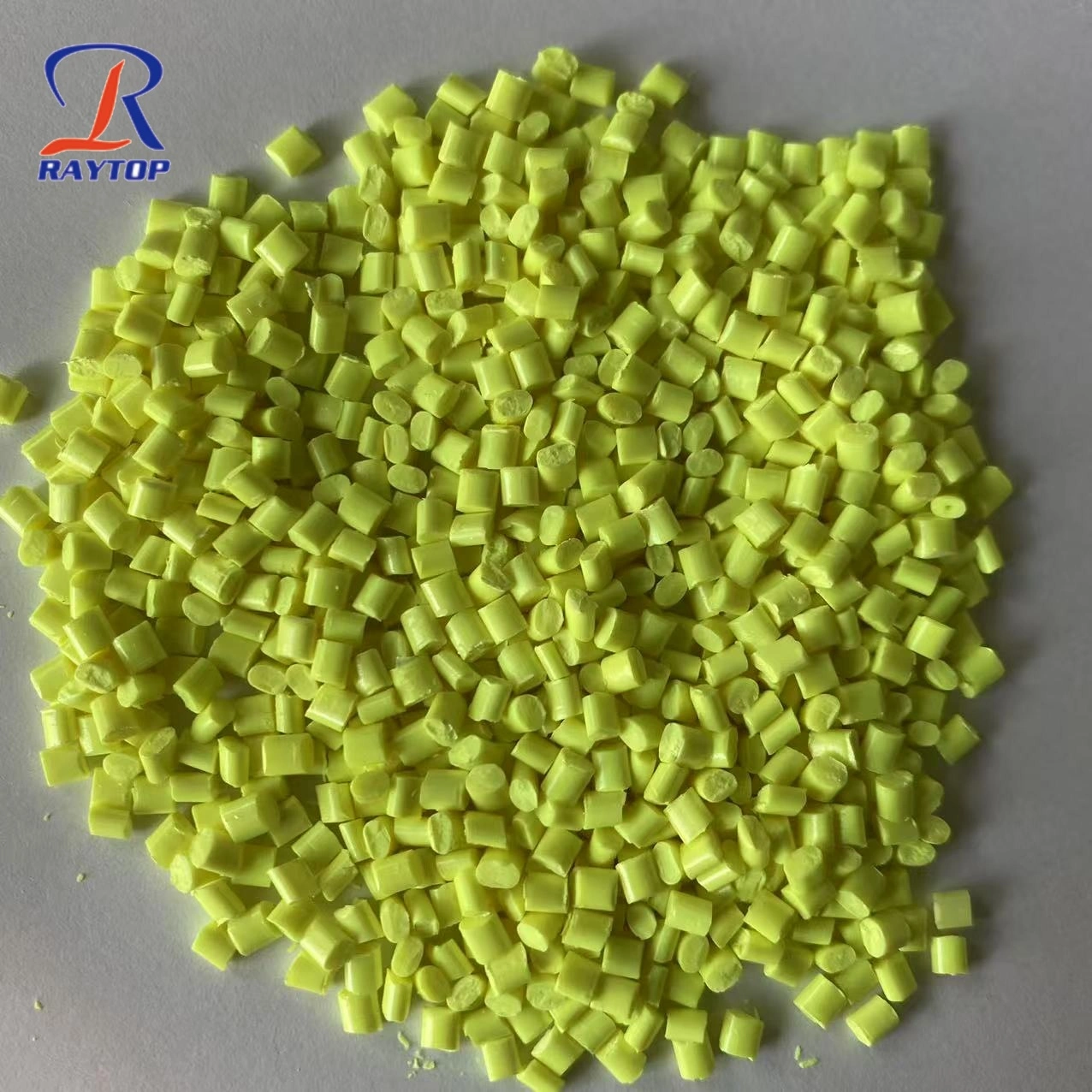
The development of PVC plastics is early, fast, low-priced, mature, and widely used. It is currently one of the most widely used plastics in the world and occupies an important position in the market. However, with the development of science and technology, human beings have higher and higher requirements for the various properties, appearance, environmental protection, safety and other aspects of plastic products. PVC plastic manufacturers will try to be annoyed by the appearance of PVC, and the storage time of PVC products is longer. When it grows longer, the color will become darker and yellower. The fluorescent whitening agent for PVC can effectively solve this problem.
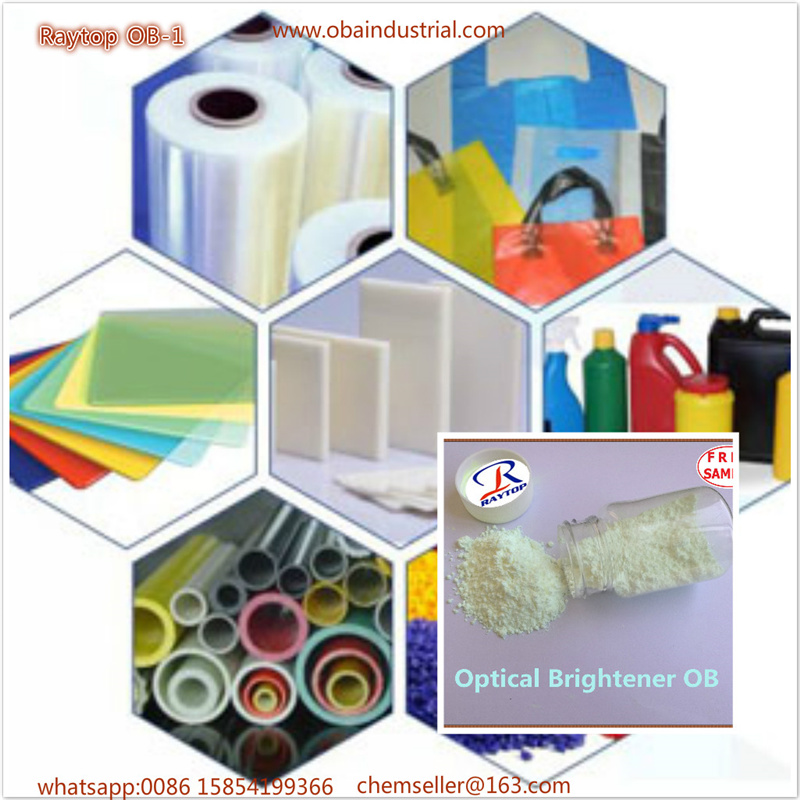
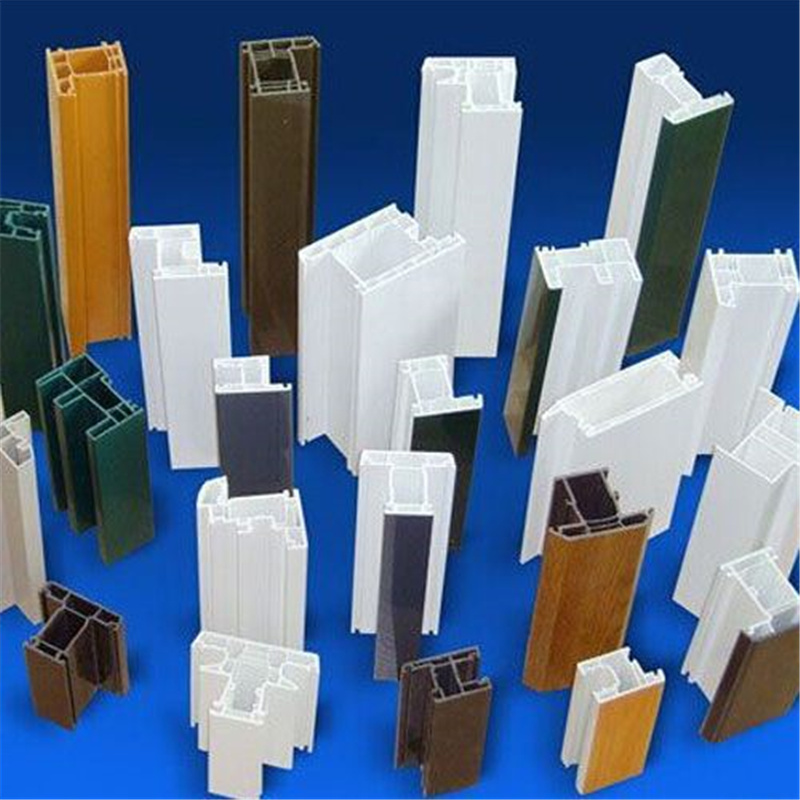
PVC is divided into soft PVC and hard PVC. Hard PVC mainly includes plates, pipes, profiles, etc.; soft PVC mainly includes table mats, door curtains, and films. Rigid PVC plastics are widely used for white in the market. At this time, manufacturers will add titanium dioxide for physical whitening and whitening of the plastic basis. This is a common whitening method because it is only a pure physical whitening. The whiteness value that can be increased is limited, and the effect of using titanium dioxide alone is always not ideal. If it is combined with PVC whitening agent, it will be different. Fluorescent whitening agent is an optical whitening product, which can increase the physical coverage of titanium dioxide. On the basis of white, the whiteness value of the product can be increased again, and the brightness of the product can be increased, and the weather resistance of the product can be improved.
When most people think of the fluorescent whitening agent used on plastics, the first thing they think of is OB or OB-1. These two fluorescent whitening agents can indeed be used for PVC plastics, but compared to the Optical Brightening Agent FP-127 the effect is still a bit worse. The special Optical Brightening Agent FP-127 for PVC plastic has strong affinity with PVC, good dispersibility, can effectively act on PVC products, and has significant whitening and brightening effects, good weather resistance, and small addition amount , Small additives solve your big problems.
What Is an Optical Brightening Agent for PVC?
An optical brightening agent is a special additive that improves the visual whiteness of plastic products by converting ultraviolet light into visible blue-violet fluorescence.
Unlike pigments that cover the original color, optical brighteners work through an optical compensation effect. They reduce the yellow tone of PVC and make the final product appear:
Whiter
Brighter
Cleaner
More attractive
Optical brighteners are widely used in:
PVC profiles and window frames
PVC pipes
PVC sheets and boards
PVC flooring
PVC films
PVC artificial leather
PVC decorative materials
Why Does PVC Need Optical Brightening Agents?
Although PVC is naturally a white polymer, several factors can affect its appearance:
1. Natural Yellow Tone of PVC Resin
PVC resin normally contains a slight yellow color due to its molecular structure. This becomes more visible in high-whiteness products.
2. Processing Temperature
During extrusion or molding, PVC is exposed to high temperatures. Thermal processing may cause:
Color changes
Reduced brightness
Slight yellowing
3. Long-Term Aging
Outdoor PVC products may experience:
UV exposure
Weathering
Oxidation
These factors gradually reduce surface brightness.
Adding a suitable optical brightener helps maintain a bright and attractive appearance.
Best Optical Brightening Agent for PVC: FP-127
FP-127 is one of the most commonly recommended optical brighteners for PVC applications.
It belongs to the stilbene fluorescent whitening agent family and is designed for plastic materials requiring high whiteness and excellent dispersion.
Advantages of FP-127 for PVC
| Performance Feature | FP-127 Performance |
|---|---|
| PVC compatibility | Excellent |
| Whitening effect | Very strong |
| Dispersion | Easy and uniform |
| Heat resistance | Good |
| Light stability | Good |
| Processing adaptability | Suitable for extrusion and molding |
FP-127 can provide a noticeable whitening effect even at low addition levels, making it an economical choice for many PVC manufacturers.
FP-127 vs OB vs OB-1: Which One Is Better for PVC?
Different optical brighteners have different chemical structures and application advantages.
The following table compares the most common options used in plastics:
| Optical Brightener | Main Application | Advantages | Limitations |
|---|---|---|---|
| FP-127 | PVC, PS, ABS, plastics | Excellent PVC compatibility, strong whitening effect, good stability | Slightly higher cost than some alternatives |
| OB-1 | PP, PE, engineering plastics | Excellent heat resistance, high brightness | Less specialized for PVC |
| OB | General plastics | Good whitening performance, widely available | Lower compatibility in some PVC systems |
| KCB | EVA, rubber, plastics | Strong fluorescence effect | More commonly used in other polymers |
For PVC products, FP-127 usually provides the best balance between whiteness, compatibility, and processing performance.
Why Is FP-127 More Suitable for PVC Than OB-1?
Although OB-1 is a high-performance optical brightener, it is mainly preferred for high-temperature plastics such as:
Polypropylene (PP)
Polyethylene (PE)
Engineering plastics
PVC processing conditions are different. PVC requires additives with better compatibility and dispersion characteristics.
FP-127 has several advantages in PVC systems:
Better Dispersion
Poor dispersion may cause:
Uneven whitening
Color spots
Surface defects
FP-127 distributes more evenly inside PVC materials.
Higher Whitening Efficiency
A small amount of FP-127 can create a strong visual whitening effect.
Better PVC Compatibility
FP-127 works well with common PVC formulations containing:
Calcium carbonate
Titanium dioxide
Stabilizers
Plasticizers
Comparison of Optical Brighteners for Different PVC Applications
Different PVC products may require different additive choices.
| PVC Product | Recommended Optical Brightener | Reason |
|---|---|---|
| PVC window profiles | FP-127 | Excellent whiteness and weather resistance |
| PVC pipes | FP-127 / OB-1 | Good processing stability |
| PVC sheets | FP-127 | Strong brightness improvement |
| Soft PVC film | FP-127 / OB | Good compatibility with flexible PVC |
| PVC flooring | FP-127 | Improves appearance and brightness |
| PVC decorative products | FP-127 | Provides high visual quality |
How Does Optical Brightener Improve PVC Whiteness?
Optical brighteners do not actually remove yellow substances from PVC.
Instead, they work through fluorescence:
The optical brightener absorbs invisible UV light.
The absorbed energy is converted into blue-violet visible light.
The blue fluorescence compensates for yellow tones.
The PVC surface appears brighter and whiter.
This effect is especially important for white PVC products where appearance quality is a key selling point.
Recommended Addition Level of Optical Brightener in PVC
The dosage of optical brightener depends on:
PVC resin type
Product color requirements
Titanium dioxide content
Processing conditions
Required whiteness level
In most plastic applications, optical brighteners are used at very low concentrations.
Excessive addition does not always improve whiteness and may cause:
Reduced cost efficiency
Color imbalance
Fluorescent appearance problems
Manufacturers should determine the optimal dosage through laboratory testing.
Factors to Consider When Choosing a PVC Optical Brightener
Selecting the correct optical brightener requires consideration of several factors.
1. Processing Temperature
Different PVC products have different processing conditions.
For high-temperature extrusion applications, thermal stability is important.
2. Product Usage Environment
Outdoor PVC products require better resistance against:
UV radiation
Weathering
Aging
3. Compatibility With Other Additives
PVC formulations often contain multiple additives.
A suitable optical brightener should work well with:
Titanium dioxide
Stabilizers
Lubricants
Fillers
Plasticizers
4. Required Appearance
Products with higher appearance requirements usually need stronger whitening performance.
Examples:
Premium PVC profiles
Decorative panels
High-end films
Can Optical Brightener Be Used Together With Titanium Dioxide?
Yes.
Optical brightener and titanium dioxide (TiO₂) have different functions.
| Additive | Main Function |
|---|---|
| Titanium dioxide | Provides opacity and basic whiteness |
| Optical brightener | Improves brightness and removes yellow appearance |
Using both together can create a cleaner and brighter white appearance.
However, the formulation balance is important because excessive TiO₂ or optical brightener may affect processing performance.
Common Problems When Using Optical Brighteners in PVC
Uneven Whitening
Possible causes:
Poor dispersion
Incorrect mixing process
Incompatible additive system
Solution:
Choose a high-quality optical brightener with good dispersion properties.
Limited Whitening Effect
Possible causes:
Incorrect dosage
Low-quality product
Excessive yellowing from other additives
Solution:
Optimize the formulation and select a suitable optical brightener.
Color Change After Outdoor Exposure
Possible causes:
Insufficient UV stability
Unsuitable formulation
Solution:
Combine optical brightener selection with proper UV stabilizers and weather-resistant additives.
How to Select the Right Optical Brightener Supplier for PVC
A reliable supplier should provide:
Stable Product Quality
The optical brightener should have consistent:
Purity
Particle size
Fluorescence intensity
Technical Support
Professional suppliers can help customers optimize:
Dosage
Formulation compatibility
Processing conditions
Application Experience
Suppliers with plastic additive experience usually understand different PVC applications better.
Frequently Asked Questions About Optical Brightener for PVC
What is the best optical brightener for PVC?
FP-127 is one of the most suitable optical brighteners for PVC because it offers excellent compatibility, strong whitening performance, and good stability.
Can OB-1 be used in PVC?
Yes, OB-1 can be used in some PVC applications. However, FP-127 is generally preferred because it provides better compatibility with PVC systems.
What is the difference between FP-127 and OB?
FP-127 is more commonly recommended for PVC due to its better dispersion and whitening efficiency. OB is a general-purpose optical brightener used in various plastics.
Does optical brightener improve PVC durability?
Optical brighteners mainly improve appearance. They do not replace UV stabilizers or antioxidants that protect PVC from aging.
How much optical brightener should be added to PVC?
The optimal amount depends on the formulation and product requirements. Manufacturers should test different levels to achieve the best balance between brightness and cost.
Conclusion: FP-127 Is the Preferred Choice for PVC Products
Choosing the right optical brightening agent is essential for producing high-quality PVC products with excellent whiteness and appearance.
Among common optical brighteners, FP-127 is one of the best choices for PVC applications because of its high whitening efficiency, good compatibility, and reliable processing performance.
For PVC profiles, pipes, sheets, films, and decorative materials, FP-127 can significantly improve visual brightness and product quality.
When selecting an optical brightener, manufacturers should consider product type, processing conditions, weather resistance requirements, and compatibility with the complete PVC formulation. A properly selected optical brightener can help create brighter, cleaner, and more competitive PVC products.
Whether you manufacture PVC profiles, pipes, sheets, films, or decorative materials, we can provide a suitable solution for your application. Contact us now to start your PVC whitening solution today.